
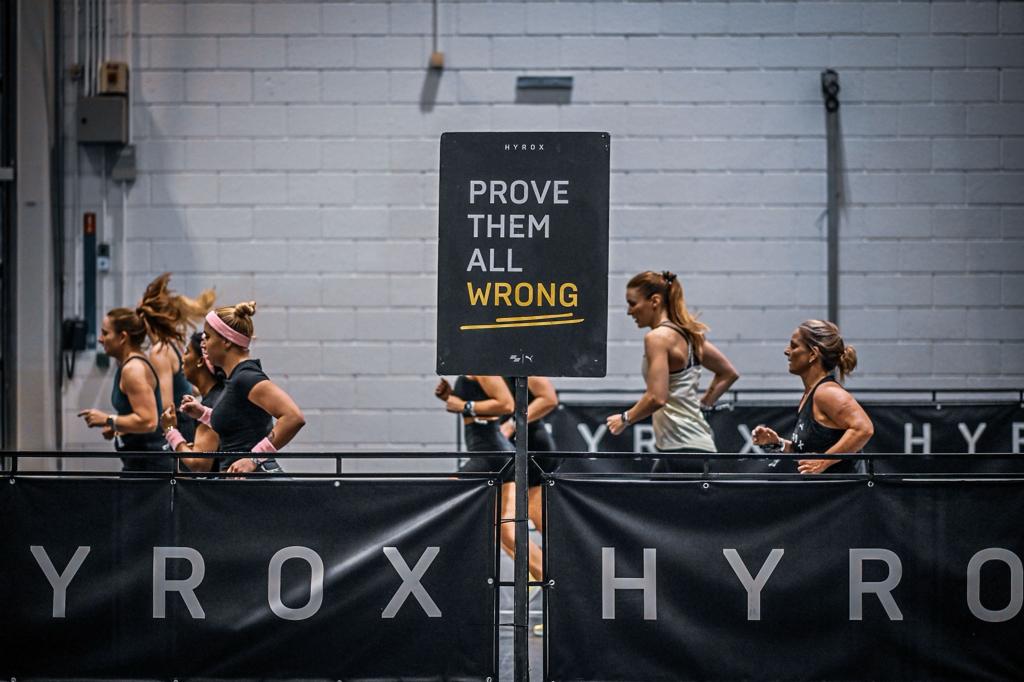
Understanding the Demands of Hyrox Double Training Days
Hyrox competitions combine endurance, strength, and functional fitness, making the demands on an athlete’s body particularly intense. Each of these element’s taxes your energy systems differently, requiring both aerobic and anaerobic power. When you add a second training session in the same day, the increased demand on your body significantly increases the need for proper nutrition strategies.
The Energy Burn
High-intensity interval training (HIIT) can burn between 500-700 calories per hour, depending on your intensity and weight. For me, at 60kg, I burn around 300-400 calories in a 35-minute HIIT session focused on strength and about 350-450 calories in a cardio-based one. And that’s just what my My Zone says.
If you’re heavier or doing longer workouts, your energy expenditure could easily hit 1,500-2,000 calories a day from exercise alone. And that’s not counting your basal metabolic rate (BMR)—the energy your body needs just to stay alive.
When training twice a day, nailing that initial recovery and managing nutrient timing is crucial to ensure that you have sufficient energy for your second workout.
When it comes to double training days, it’s not just about eating before and during each workout—it’s how you recover between the first and second sessions that really matters. So, how do you fuel up properly to nail both workouts without running on empty?
Pre-Training Nutrition: How to Fuel Before the First Workout
Getting your nutrition right before the first workout is key to setting yourself up for success. A well-planned pre-workout meal gives you sustained energy, supports muscle function, and ensures you don’t hit a wall halfway through.
Aim to eat a balanced meal with carbs, protein, and a little fat 1-3 hours before your workout. As a start aim for 1.0g/kg/bm carbohydrates, (70g for a 70kg person) to help fuel that session. You can amend this accordingly depending on the intensity and duration of your workout.
Here are some great pre-workout options:
- Oatmeal or Weetabix with Banana, honey and Nuts:
- Whole-Grain Bagel with Eggs and glass of fruit juice:
- Greek Yogurt with Honey and Granola:
- Strawberry and dark chocolate chip overnight oats.
If your first session is a couple of hours after breakfast, top up with a light snack 30 minutes before to keep your energy up:
- Banana
- 250ml Fresh Juice
- 200g grapes
- Cereal Bar

Intra-Training Nutrition: Staying Fuelled During Intense Workouts
During long or intense sessions, keeping your energy levels up is crucial. The goal of intra-training nutrition is to give your body quick fuel to maintain performance and manage fatigue.
When to Eat/Drink During Hyrox Sessions
If your session is under an hour, water and electrolytes will usually do the trick, especially if you’ve eaten well beforehand. However, on double training days and especially when in hard training blocks and sessions are intense, I would encourage fuelling at every opportunity.
Here’s how to stay fuelled:
- For workouts lasting 1-2 hours: Aim for 30-60g of carbs per hour. Try a banana and a 500ml sports drink, or a cereal bar and an energy gel.
- For sessions longer than 2 hours: Go for up to 90g of carbs per hour, mixing different sugars for better absorption. Think 2:1 energy gels, jellies, and a 500ml sports drink.
30g Carbohydrate snacks:
- Large Banana
- 250g Grapes
- 2 X 28g Box Raisins
- Chocolate Rice Krispy Square
- 3 Rice Cakes
- 50g Jellies
- 250ml Fruit Juice
- 500ml Sports Drink
- ~ 1 Energy Gel (Varies by brand)
Recovery Nutrition After the First Workout
When training twice a day, nailing that initial recovery and managing nutrient timing is crucial to ensure that you have sufficient energy for your second workout.
If you plan to train again within 8 hours, it is important to begin refuelling as soon as possible after exercise. The guidance indicates that beyond 8 hours the combination of rest and a balanced carbohydrates diet should be enough to replenish energy stores. But I guess that depends on your day job (literally)!
To promote rapid post-exercise recovery, aim to consume 1.0-1.2g carbohydrate/kg/bm per hour for the first 4 hours after exercise. For a 70kg person this is 70-84g carbohydrate. For muscle recovery include protein between 0.3-0.4g/kg/bm. That’s 21g – 28g protein for a 70kg person.
For some this can be lot of food and if you have ever felt like not eating after a hard session there is a logical reason for this. Intense exercise diverts blood flow from the digestive system to the working muscle, which surprises appetite. Therefore, it’s best to look at combining fluid and snacks that get the energy in and simply practice.
Immediate recovery, within 30 minutes, should be fast release carbohydrates with protein for muscle repair and fluid to rehydrate. The other nutrients such as fats and fibre can come in the later meals.

Examples of combining recovery options of both food and supplements.
600ml chocolate milk + banana (~75g carbs and 21g protein)
Arla Yoghurt Pouch + Sports Drink + banana + Rice Krispy Square (~75g Carbs and 22g protein)
Jam Bagel + 20g Arla Pouch (~70g carbs and 30g protein)
Healthspan Elite Mass Gain Protein Supplement (70g carbs and 30g protein)
Nutrition X MRM Protein Supplement (60g carbs and 30g protein)
Nutrient Timing: Balancing Meals Between Two Workouts
Timing your meals right is key to performing well in both workouts. How long you have between sessions will determine your nutrition strategy.
The duration between your two workouts will influence your nutritional strategy as will the type of training you’re doing. For example:
- Running sessions and short gaps (less than 2.5 hours): Running creates jostling of the stomach, which can lead to gut and digestive issues. In this case you would either need to leave a longer gap to ensure your food is digested or focus on more fast release meals like white bagels, white rice or white skinless potatoes with a modest protein serving.
Looking the type of session, you do first and second, how the movements impact the gut and how the fatigue impacts the quality of the second session can make the difference to your training. It’s not just how you can recovery nutritionally, but how you can recover physically and mentally too.
- Longer Gaps (2.5 – 4 Hours): Here you have the opportunity to consume more substantial meals that include a balance of high fibre carbohydrates, protein, and fats. A meal like grilled chicken with sweet potato and mixed vegetables provides sustained energy and supports recovery while preparing you for the next workout. This longer gap allows for more complete digestion and absorption of nutrients.
In both scenarios you can continue to top up further with the 30g snacks and remember to top up before you head into that second session.
Recovery Nutrition After the Second Workout
It’s the same drill as before, aiming for that 1-1.2g/kg/bm of carbohydrates for glycogen replenishment, 0.3-0.4g/kg/bm protein for muscle recovery and fluids to rehydrate within 30 minutes of the session.
Then continue your recovery with a meal 1-2 hour after with the high fibre carbohydrates, protein and veg meal. Add desserts and drinks for extra energy if you have really pushed your limits.
Some meal ideas:
- Grilled chicken with quinoa and veggies
- Teriyaki salmon, potatoes, and greens
- Spaghetti Bolognese
- Tofu Stir Fry with noodles
Still hungry?? Late night snacks are fine, yes you can eat past 8pm if you need to. Protein has a high satiety and can help with that feeling of fullness as it will provide continued support for that muscle repair. Here are some high protein snacks that might help stop the hunger pangs and help you sleep through and wake up ready to take on another day:
- Flavoured milkshake
- Arla/Skyr/Greek Yoghurt with fruit and granola
- Protein shakes with a banana:
- Casein shake: a slow-release protein that support muscle turnover into the night.
Hydration and Electrolytes
I haven’t gone into detail in this post about the role of hydration on performance. Starting exercise hydrated, maintaining and replenishing sweat loss is critical to the delivery of nutrients, oxygen and thermoregulation.
Research has shown that dehydration beyond 2% can impair endurance performance and 3% and beyond strength and power. I have provided information on hydration in the Free Hyrox Download, which you can access below 👇🏼
Special Considerations for Hyrox Athletes
Hyrox combines endurance, strength, and functional fitness, placing high demands on the body, so smart fuelling is key to thriving through multiple workouts.
On double training days it’s important that you start the first session fully fuelled and hydrated. How effectively you refuel after this session; replenish depleted glycogen and water stores and start repairing with protein, will determine the how well you conquer the next session.
Remember every athlete is different, so you need to adjust your nutrition based on your body weight, workout intensity, and training goals.
To get your bespoke plan and start your journey hitting those body composition goals, book an Initial Consult now.


