
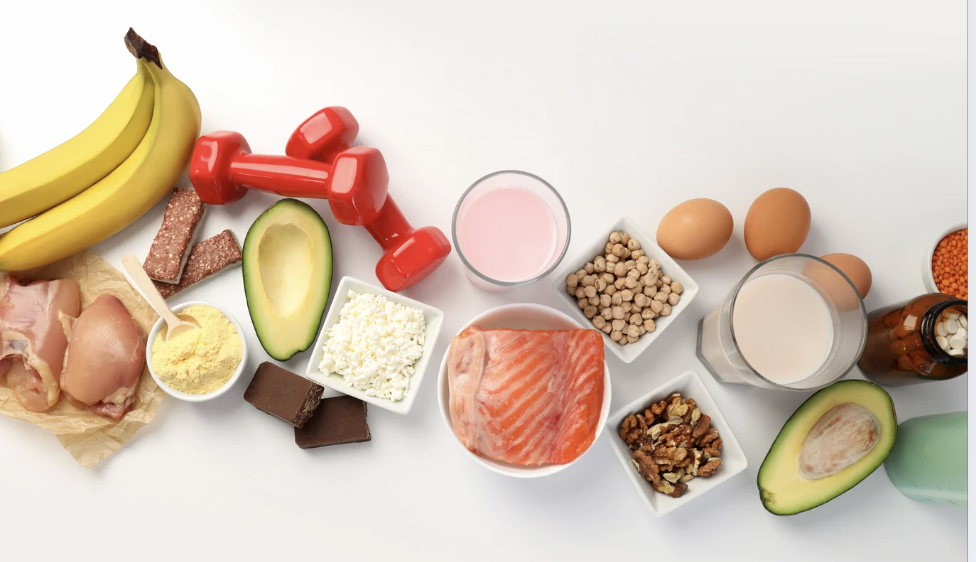
Struggling to build muscle is very common. Many people train consistently and eat well, yet muscle gain feels slow or unpredictable. Body weight may not change and muscle size stays the same. This is frustrating, but it is also explainable.
Muscle gain follows clear biological processes. The body does not build muscle just because training feels hard. It builds muscle when the right signals and resources are present. Understanding these basics makes muscle gain far more predictable.
This blog outlines five evidence based strategies to enhance muscle gain, explained clearly and without assuming a nutrition background.
Strategy 1: Eat enough energy to support muscle protein synthesis
Muscle gain requires energy. The process that builds muscle is called muscle protein synthesis. This is the process where the body uses protein to repair and build new muscle tissue.
Muscle protein synthesis is stimulated by resistance training and protein intake. When muscle protein synthesis is higher than muscle protein breakdown over time, muscle gain occurs.
This process is regulated by a signalling pathway called mTORC1. mTORC1 acts like a control switch for muscle building. It responds to training, protein intake, insulin, oxygen availability, and overall energy status.
If energy intake is too low, mTORC1 activity is reduced. This means muscle protein synthesis is blunted, even if protein intake appears adequate. In simple terms, the body will not invest energy into building muscle if it does not feel there is enough fuel available.
This explains why many people struggle with muscle gain despite eating regularly. Meals may feel filling, but total energy intake may still be too low to support growth.
For muscle gain to occur, energy intake must consistently exceed energy expenditure. This does not mean overeating. It means eating enough to support training, recovery, and daily demands.
Strategy 2: Prioritise total daily protein intake
Protein provides the building blocks needed for muscle protein synthesis. Without enough protein, muscle gain cannot occur, regardless of training quality.
The strongest and most consistent finding in the research is that total daily protein intake drives the majority of the muscle gain response. Meal timing and distribution can improve outcomes, but they cannot compensate for low daily intake.
For most people aiming to build muscle, a daily intake of around 1.6 to 2.2 grams of protein per kilogram of body weight is well supported. This range allows for differences in training load, appetite, and food choices.
Higher protein intakes are not always better. What matters most is consistency. Muscle gain slows when protein intake is adequate on some days and low on others.
If muscle gain has stalled, total daily protein intake is one of the first areas to review.
Strategy 3: Include enough protein at each meal to stimulate muscle protein synthesis
While daily protein intake sets the overall potential for muscle gain, muscle protein synthesis responds to individual meals.
Each time you eat protein, muscle protein synthesis increases for a period of time. However, this response depends on the amount of protein consumed. Very small protein doses do not fully stimulate the muscle building process.
Research suggests that consuming around 0.3 to 0.4 grams of protein per kilogram of body weight per meal provides a strong stimulus for muscle protein synthesis in most people. Spread across three to five meals, this approach supports repeated stimulation throughout the day.
Earlier research suggested that 20 grams of protein per meal was sufficient. This was based on limited exercise models. Later studies showed that larger training sessions involving more muscle mass require larger protein doses of 40 grams to maximise muscle protein synthesis.
The key point is that meals need to contain a meaningful amount of protein. Meals that are mostly carbohydrate or fat provide little support for muscle gain.
Strategy 4: Consume Leucine Rich Proteins to Trigger Muscle Gain
Not all protein sources stimulate muscle protein synthesis equally. How effective a protein is for muscle gain depends on how quickly it is digested, the amino acids it provides, and whether it contains enough leucine to activate muscle building.
Muscle protein synthesis is the process by which the body repairs and builds new muscle tissue. To do this, all nine essential amino acids are required. One of these, leucine, plays a key role because it helps activate mTORC1, the pathway that switches muscle building on after training.
Animal based proteins tend to support muscle gain well because they naturally contain all essential amino acids and are rich in leucine. Dairy protein is a good example. Milk contains two main proteins: whey and casein. Around 20 percent of milk protein is whey, which is digested quickly, and around 80 percent is casein, which is digested more slowly. This combination provides both a fast and sustained muscle building signal.
Other animal based proteins, such as meat, fish, and eggs, also provide a complete amino acid profile and support muscle gain effectively.
Plant based diets can also support muscle gain, but protein selection matters more. Many plant proteins are lower in one or more essential amino acids, so combining sources is important. Some plant proteins, such as potato and corn protein, are higher in leucine and can also stimulate muscle protein synthesis when eaten in sufficient amounts.
Examples of complete and combined plant proteins
Complete plant proteins include soy foods, quinoa, and buckwheat.
Incomplete proteins can be combined across meals, such as rice and beans, lentils and wholegrains, or hummus with pita.
Muscle gain on a plant based diet is achievable, but it requires planning rather than assumption.
Strategy 5: Distribute protein intake across the day and before sleep
Once total daily protein intake is adequate, how protein is distributed across the day can further support muscle gain.
After each protein containing meal, muscle protein synthesis increases, then gradually returns to baseline. Spreading protein intake across the day allows this process to be stimulated repeatedly, rather than relying on one or two large meals.
For most people, a practical approach is three to five protein rich meals per day, spaced roughly every three to five hours.
In the past, a lot of focus was placed on the anabolic window, the idea that protein must be consumed immediately after training for muscle gain to occur. Current evidence shows this window is far wider than once thought. Muscle protein synthesis remains elevated for hours after training, meaning there is no single short window that must be hit.
That said, post training remains a useful opportunity to eat. In practice, many people struggle to remember to eat enough protein across the day. Using training as the cue to eat removes decision making and reduces mental load. Training finishes, protein is consumed (and carbohydrates to support glycogen replenishment and help hit that energy intake). This approach helps build consistency and makes hitting daily protein (and energy) targets easier.
Pre-Bed Protein
Sleep presents another challenge for muscle gain. Overnight, the body is in a fasted state and muscle protein breakdown increases. Consuming protein before bed has been shown to increase overnight muscle protein synthesis and improve overall protein balance.
Protein sources that digest slowly, such as casein or dairy based foods, are particularly useful before sleep because they provide a steady release of amino acids through the night.
This strategy is not essential for everyone. However, it can support muscle gain when training volume is high, recovery demands are elevated, or when consistency with daily protein intake is a challenge.
Remember: Training must support muscle gain
Nutrition supports muscle gain, but training provides the signal.
Resistance training that challenges the muscles is required to activate muscle protein synthesis. This typically involves lifting loads that feel hard, performing multiple sets, and gradually increasing training demands over time.
If training does not provide enough stimulus, muscle protein synthesis remains low, regardless of nutrition quality. Aligning training with the goal of muscle gain is essential.
Bringing the strategies together
Struggling to build muscle is rarely about effort. It is usually about missing one or more biological requirements.
Muscle gain occurs when muscle protein synthesis is consistently supported through adequate energy intake, sufficient protein, effective protein sources, and appropriate training.
Understanding concepts like muscle protein synthesis and mTORC1 helps explain why certain strategies work. When these foundations are in place, muscle gain becomes more predictable and sustainable.
If muscle gain has felt confusing or slow, simplifying your approach while respecting the biology is often the solution.
If you would like guidance on how to apply these strategies to your own training and nutrition, you can book a free 15 minute Discovery Call to discuss whether working together is the right fit.


